
AI evaluation and observability: if it isn't measured, it isn't shipped.
Evaluation suites and monitoring that catch drift, hallucination, and regressions before your users do — built into every release, not bolted on after an incident.
Every offer on this site mentions evaluation suites and guardrails — this is the discipline behind that sentence. Golden datasets scored against real production traffic, regression gates that block a bad release before it ships, and monitoring that separates 'the model changed' from 'the world changed.' We build it once, then operate it, because an eval suite nobody maintains is worse than no eval suite — it lies to you with a green checkmark.

Not a feature list. A Tuesday morning.
Here's what each of these actually looks like once it's running against your real workflows — not the pitch, the mechanism.
Golden-dataset evaluation suites scored against real traffic
Every model or prompt change gets scored against 500 real past interactions before it reaches a single customer — sampled anecdotally is not how this gets checked; scored systematically is.
Regression gates that block a bad release before it ships
A prompt tweak that quietly drops accuracy on edge cases never reaches production — the same way a failing test blocks a bad code merge, the eval suite blocks a bad model change.
Guardrails: confidence thresholds, refusals, escalation paths
When the model's confidence drops below the line you set, the case routes to a human automatically — instead of a wrong answer going out carrying the same tone as a right one.
Production monitoring for drift, cost, and latency
Three weeks after launch, silent model drift starts eroding accuracy. A dashboard catches it in the weekly review — not a customer complaint six weeks after the fact.
Our demo is the product.
Running right now, in this page. Give it something real — including something it should refuse — and see where its edges actually are.
A real agent, not a screenshot. Give it something to work on and watch what it does — including what it refuses to guess at.
Live agents on fictional businesses and invented records. Nothing you say or paste here is recorded or stored — it lives in this tab and dies with it. A production deployment runs on your data, your systems, and your policy.
Shipped, not promised.
AI Support Agent for a DTC Ecommerce Brand
A production support agent handling order status, returns, and product questions across email and chat — integrated with Shopify and the brand's 3PL, with human escalation built in.
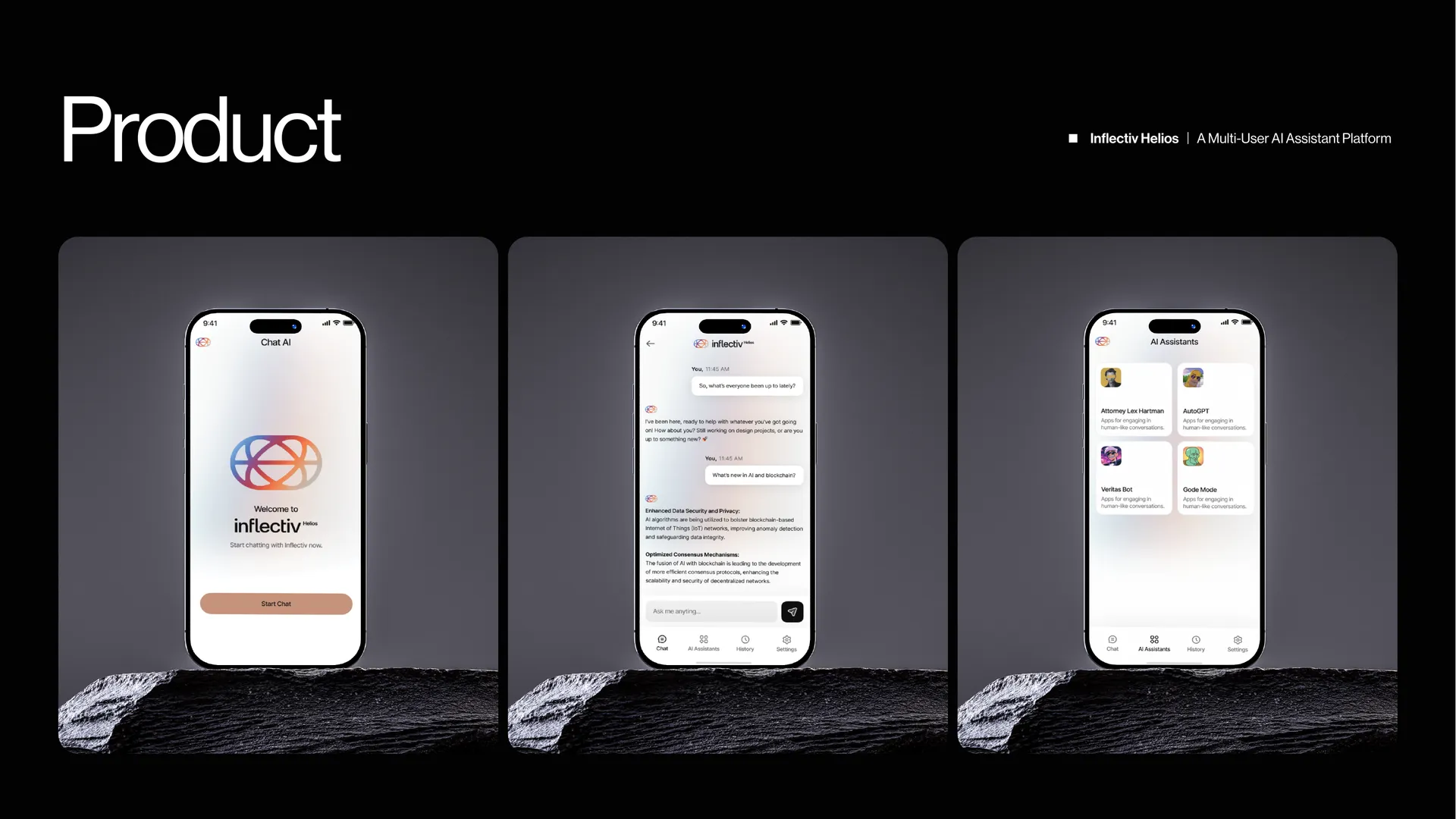
Inflectiv Helios — Multi-Assistant AI Platform
A multi-user AI assistant platform: specialized assistants per knowledge domain, conversational UI with history and personalization, Google Calendar/Meet integration, and full prompt observability — built to absorb new AI capabilities.
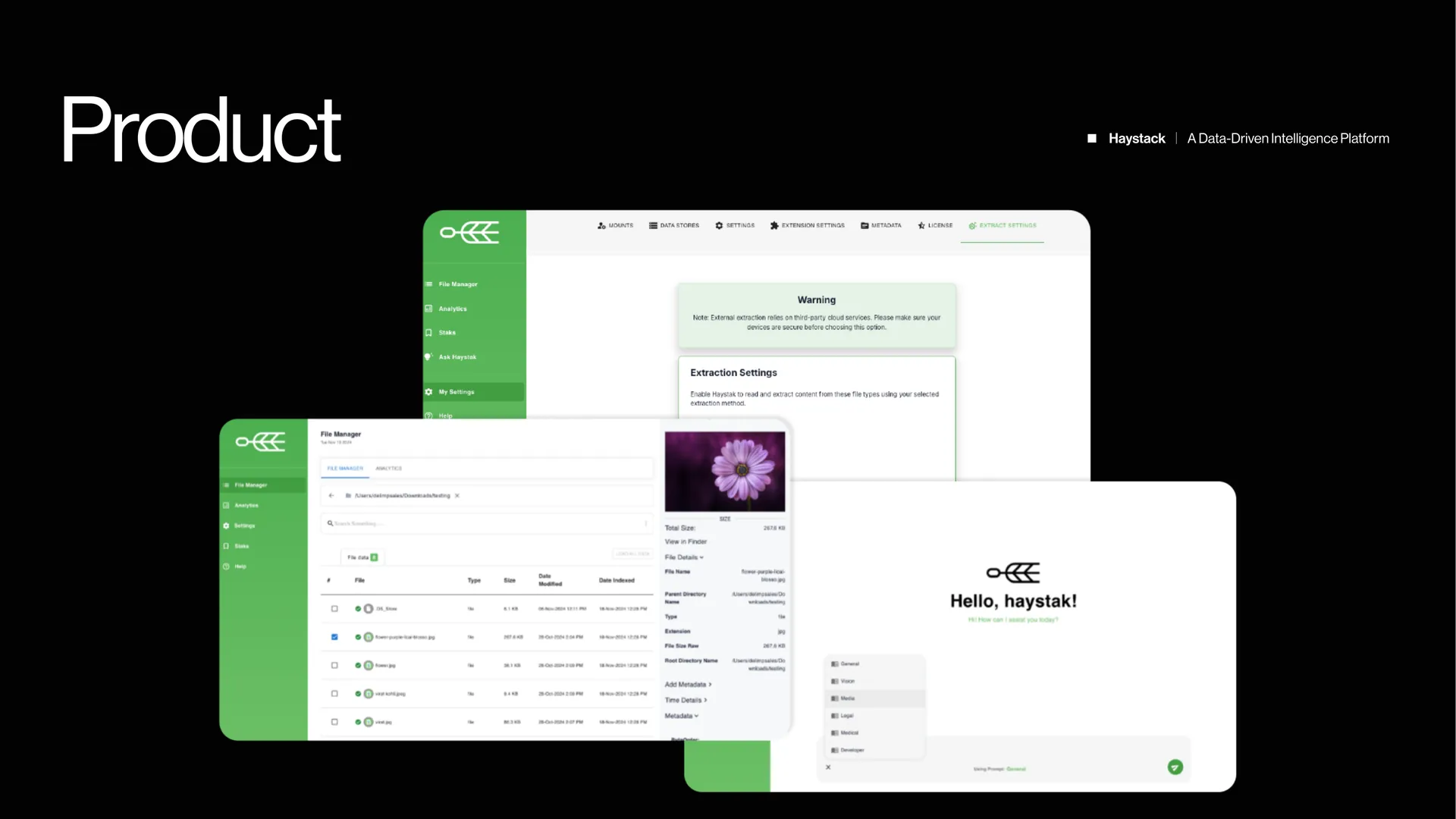
Haystack — AI Data Intelligence Platform
A data-driven intelligence platform: one AI search layer across documents, data lakes, and repositories, with real-time indexing, AI-driven correlation, and workflow automation — built to hold up under heavy data loads.
Concrete, not conceptual.
Every engagement under this capability produces the same kind of artifact — reviewed weekly, owned by you from day one.
See what evaluation & observability would look like in your stack.
The path to production.
Baseline
Define what 'correct' means for your use case and build the golden dataset from real examples, not synthetic ones.
Harness
An evaluation suite that scores every model or prompt change before it ships.
Guardrail
Confidence thresholds, refusals, and escalation paths for cases the model shouldn't handle alone.
Monitor
Production dashboards and a review cadence that catch drift before a client complaint does.
How the stack orchestrates.
Chosen per engagement, never the other way around — this is how the pieces actually connect around the system we're building.
Asked on every first call.
An audit of what's actually shipping today — sampled outputs scored against a baseline we build with you — before touching the system itself. Most teams are surprised by what the audit finds.
A model tested once and never re-checked drifts silently — provider model updates, changing user behavior, and data drift all erode accuracy without an obvious failure. This is a standing discipline, not a launch gate.
Yes — this is one of our most common standalone engagements. We don't need to have built the system to instrument it properly.
Let's put AI to work in your business.
A 30-minute call. You bring the workflow or the roadmap — we'll tell you what's feasible, what it costs, and what we'd build first.