
AI integration services for enterprises that don't replace anything.
Your existing systems, made AI-capable — without a rip-and-replace.
Enterprises don`t get AI value from chatbots bolted on the side — they get it when AI reaches the systems of record. We modernize the integration layer: APIs over legacy systems, data pipelines that make your information retrievable, identity and permission models that let AI act safely, and incremental replacement of the components that block progress. ${yearsInBusinessWords()} years of enterprise software patterns, applied to the AI transition.

Not a feature list. A Tuesday morning.
Here's what each of these actually looks like once it's running against your real workflows — not the pitch, the mechanism.
AI readiness assessment & integration roadmap
Instead of guessing where AI can help, a two-week audit shows exactly which of your systems are AI-ready today and which need work first — each with a cost attached, not a hunch.
APIs and MCP servers over legacy systems
Your 15-year-old ERP was never built to talk to an LLM. An MCP server sits in front of it, so an agent can read inventory and post updates without anyone touching the legacy codebase itself.
Data pipelines: from silos to AI-retrievable
Customer history currently lives in four disconnected databases. A pipeline unifies it into something a retrieval system can actually search — turning 'we'd have to check' into an answer in seconds.
Security, identity & audit for AI access
Before any AI system touches production data, it gets its own scoped identity and a permission set narrower than your newest hire's — every action logged, nothing assumed.
Our demo is the product.
Running right now, in this page. Give it something real — including something it should refuse — and see where its edges actually are.
A real agent, not a screenshot. Give it something to work on and watch what it does — including what it refuses to guess at.
Live agents on fictional businesses and invented records. Nothing you say or paste here is recorded or stored — it lives in this tab and dies with it. A production deployment runs on your data, your systems, and your policy.
Shipped, not promised.
Concordia Colleges — 150-Branch SIS Platform
A complete Student Information System for a network of 150+ college branches: revenue and royalty management, fees, LMS, student and teacher operations, payroll, and accounts — unified on one platform.
Cove — Home Security Platform Consolidation
Operator portal, headless CMS, and marketing platform for a US home-security device ecosystem — three disconnected systems consolidated into one operator experience.
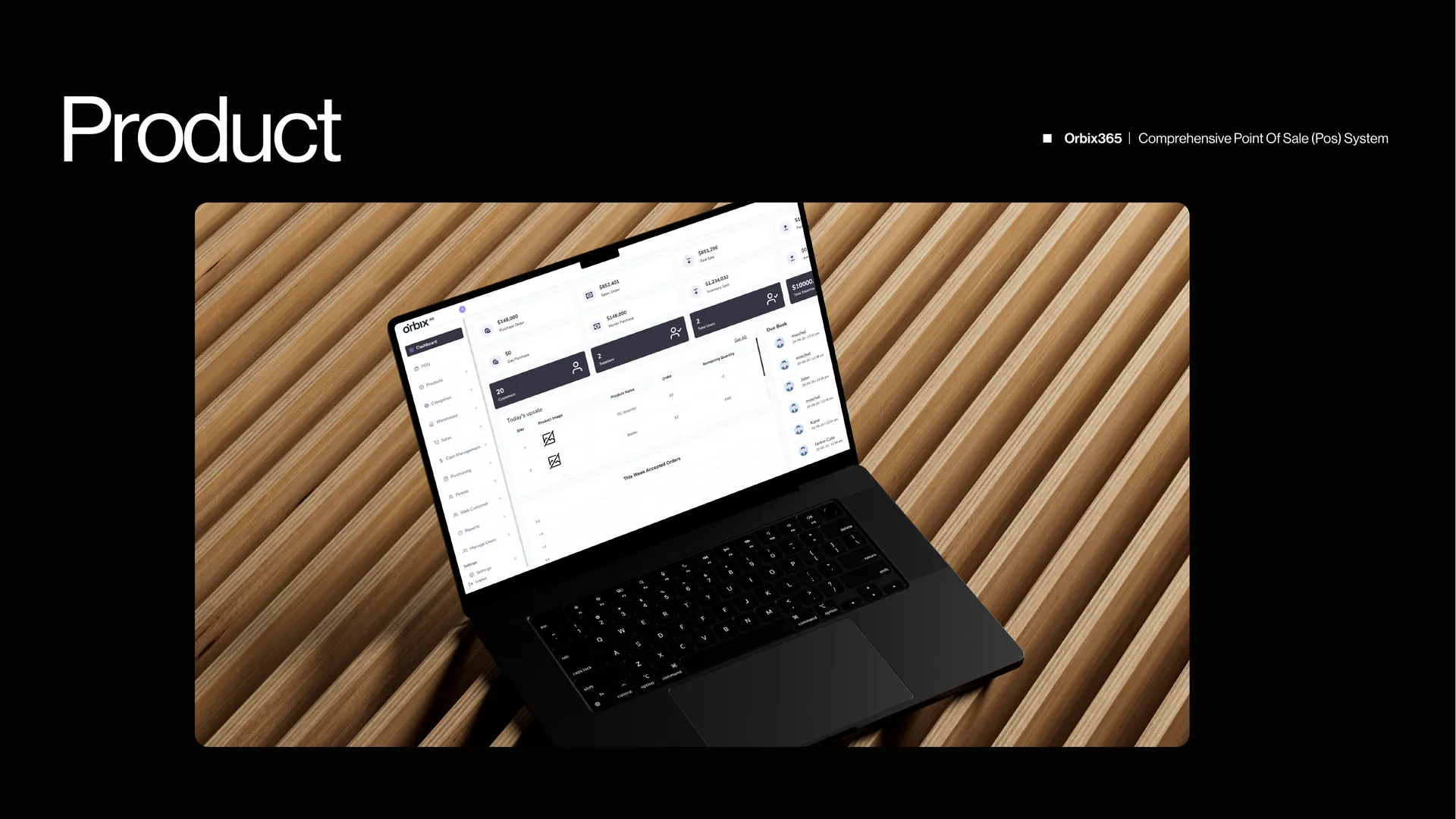
Orbix 365 — POS & Multi-Warehouse Commerce System
A comprehensive point-of-sale system: sales and purchases, barcode-tracked inventory across multiple warehouses, customer and supplier ledgers, eCommerce sync, logistics integration, and a real-time financial dashboard.
Beyond Technologies ensured a streamlined workflow with consistent project updates throughout — the platform now runs our entire network.
Not hypothetical. Shipped, by vertical.
Only the industries where this exact capability has a real, running engagement behind it — not a generic list of who we'd like to work with.
Concrete, not conceptual.
Every engagement under this capability produces the same kind of artifact — reviewed weekly, owned by you from day one.
See what ai integration would look like in your stack.
The path to production.
Assess
Two-week audit: systems, data, security posture, and the AI use cases they can support.
Expose
Safe interfaces over systems of record — APIs, events, MCP servers — with permissioning.
Connect
First AI workflow live against real systems, behind guardrails, with measurable output.
Modernize
Incrementally replace the components that limit scale, cost, or safety.
How the stack orchestrates.
Chosen per engagement, never the other way around — this is how the pieces actually connect around the system we're building.
Asked on every first call.
That`s the normal starting point. We build the retrieval and integration layer first — exposing legacy data through safe APIs and pipelines — so AI works against your reality, not an idealized architecture. Full modernization can follow incrementally.
AI access goes through the same discipline as human access: scoped service identities, least-privilege permissions, complete audit logs, and data-boundary controls (what can leave, what must stay). We work within SOC 2, HIPAA, and PCI-aligned environments.
A two-week engagement that maps your systems, data quality, and security posture against the AI use cases you care about — and returns a prioritized, costed roadmap. It's the lowest-risk way to start; findings are yours regardless of who implements.
Usually not. Most AI value comes from putting a modern interface layer over existing systems. We recommend replacement only where a component genuinely blocks scale, cost, or safety — and then incrementally, never big-bang.
Let's put AI to work in your business.
A 30-minute call. You bring the workflow or the roadmap — we'll tell you what's feasible, what it costs, and what we'd build first.