
The backend an agent can actually trust.
Node.js services built to run the unglamorous half of an AI product: orchestration, permissioning, retries, and the integrations that connect an agent to systems that already exist.
We're a Node.js development services partner for one particular kind of backend: the orchestration layer behind an AI agent or generative AI application. That means webhook and queue handling for asynchronous tool calls, retry and idempotency logic when an external API fails mid-workflow, and the permission and audit-logging layer that lets an agent write to a CRM or ERP safely. We've built this layer for an AI seller assistant handling live Amazon Seller Central data, a data-intelligence platform searching across every silo in a business, and a province-wide teacher-training platform running offline-first on low-end devices — different domains, the same discipline underneath.
Not a feature list. A real workflow.
Here's what this actually looks like once it's running against your product — not the pitch, the mechanism.
Idempotent tool calls, so a retry never double-books
An agent calls a payment or inventory API, the request times out, and the orchestrator retries. We build every tool call with an idempotency key so a retry is safe by construction — not a rule the model has to remember to follow.
Queues and webhooks for work that outlives a request
A document-enrichment or scoring job can run longer than an HTTP timeout allows. We move it onto a queue with its own retry and dead-letter handling, so a slow job never blocks the interface or silently drops.
Permission boundaries an agent can't talk its way around
The backend — not the prompt — decides what an agent's write access actually covers. Vaisela's seller assistant reads Seller Central data through a scoped integration with zero external data exposure by design, not by policy alone.
Shipped, not promised.
Government of Punjab — Province-Wide Teacher Training
An interactive early-childhood teacher training program delivered as an offline-first mobile application — deployed province-wide on low-end devices with intermittent connectivity.
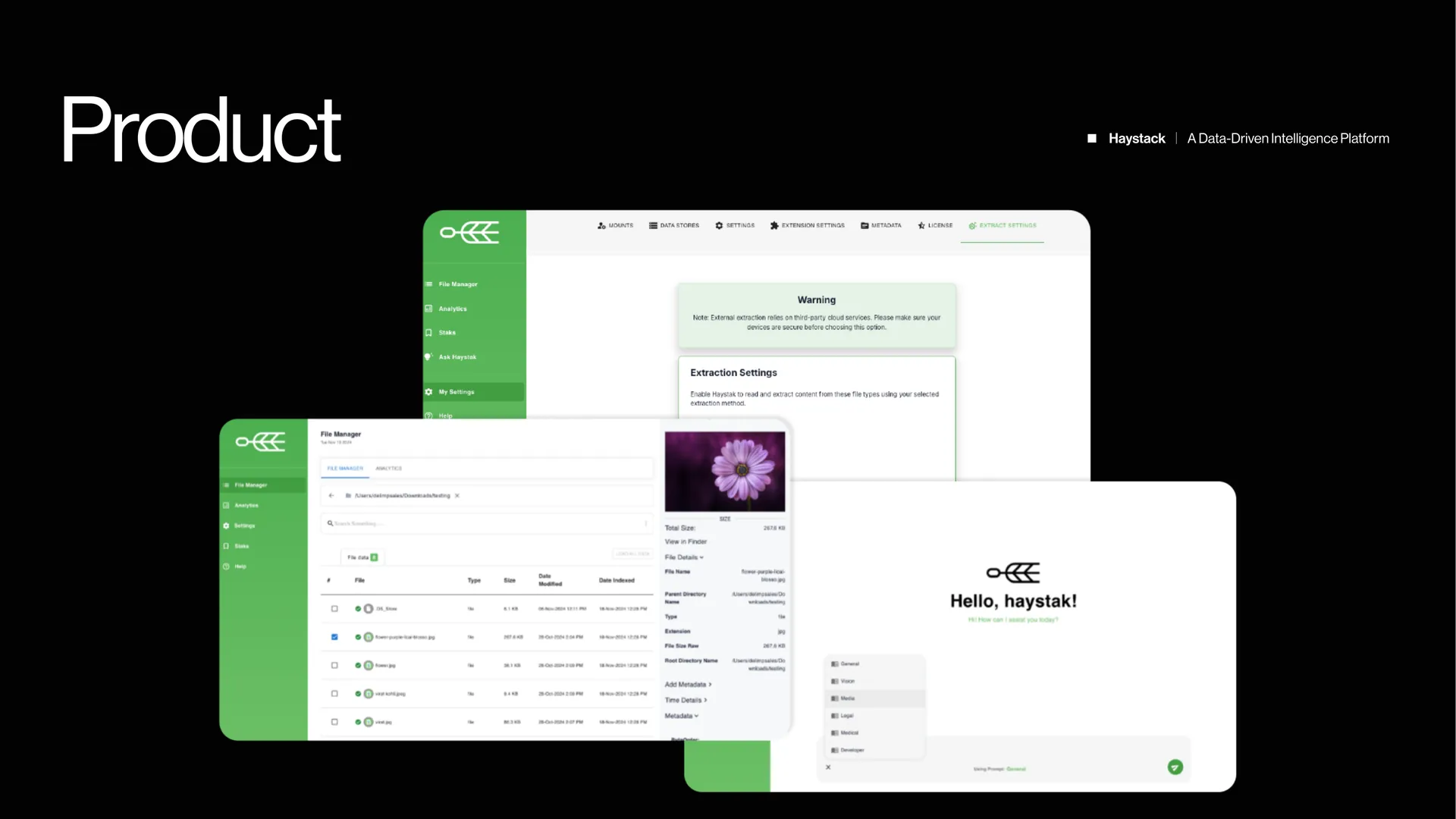
Haystack — AI Data Intelligence Platform
A data-driven intelligence platform: one AI search layer across documents, data lakes, and repositories, with real-time indexing, AI-driven correlation, and workflow automation — built to hold up under heavy data loads.
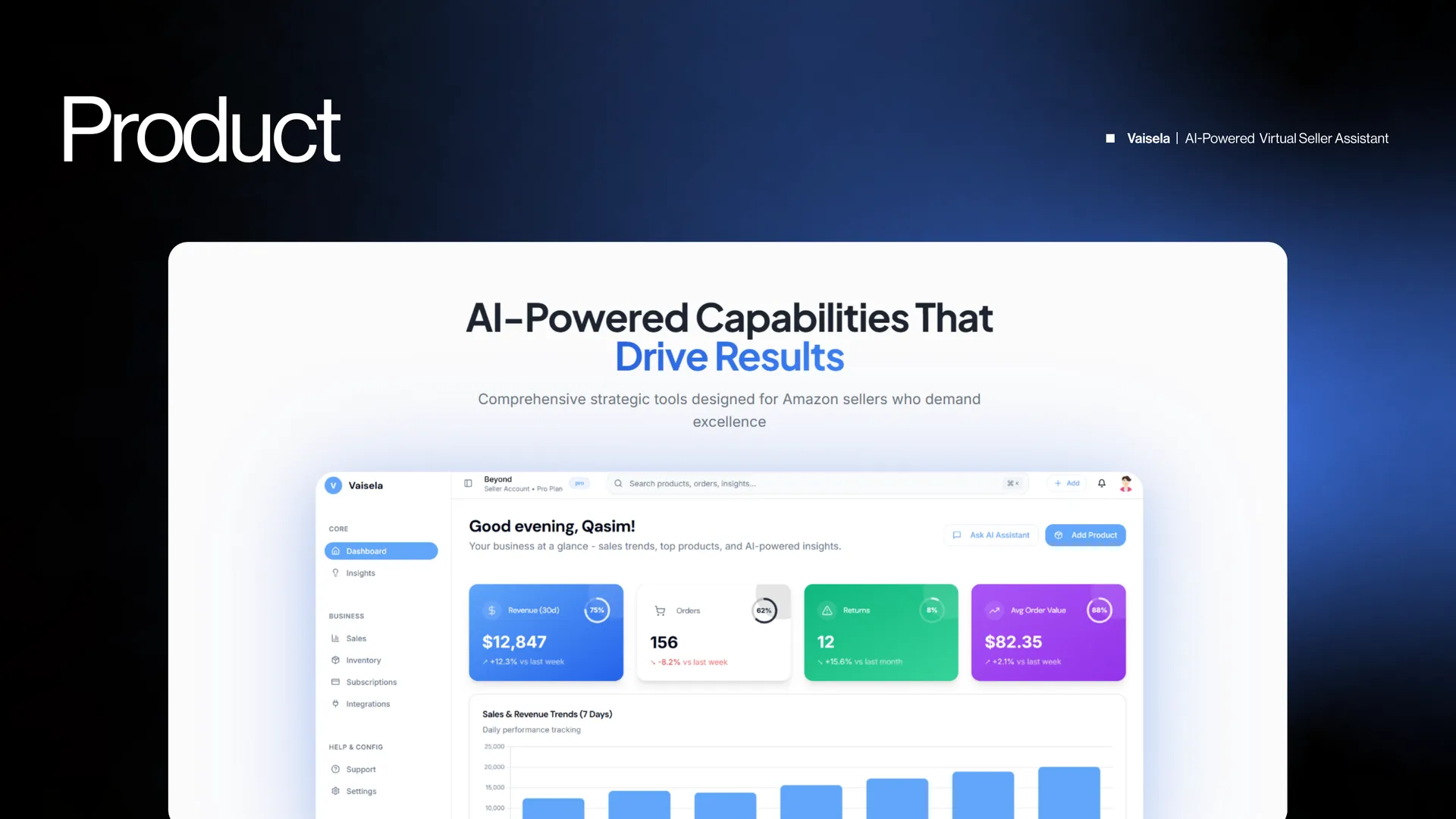
Vaisela — AI Virtual Seller Assistant for Amazon
An AI-powered virtual assistant for Amazon sellers: a custom-trained LLaMA model analyzes Seller Central data and proactively recommends actions — privacy-by-design, piloted with 200 sellers, architected to scale to millions.
Concrete, not conceptual.
Every engagement under this stack produces the same kind of artifact — reviewed weekly, owned by you from day one.
See what Node.js would look like on your AI system.
How Node.js orchestrates.
Chosen per engagement, never the other way around — this is how the pieces actually connect around the system we're building.
Asked on every first call.
Whichever fits the project's shape — NestJS when a service needs real structure and a team growing into it (Haystack's search platform), Express or plain Node when a leaner service is the right call (the Punjab Government teacher-training platform). We pick the framework for the job, not out of habit.
Through a scoped service account with the narrowest permissions the workflow needs, every write logged with what changed and why, and a human-approval gate on anything outside a pre-agreed policy — the same pattern behind Gigbase's role-based agency platform and Vaisela's Seller Central integration.
Node.js orchestrates; it doesn't train or run models itself. Where a workflow needs real inference — classification, embeddings, scoring — we run that in Python behind an internal API and call it from the Node.js layer.
Let's put AI to work in your business.
A 30-minute call. You bring the workflow or the roadmap — we'll tell you what's feasible, what it costs, and what we'd build first.