
Where the model actually runs.
Python for the layer that does the real machine-learning and data work behind an AI product — pipelines, model integration, and evaluation, engineered to run in production, not just in a notebook.
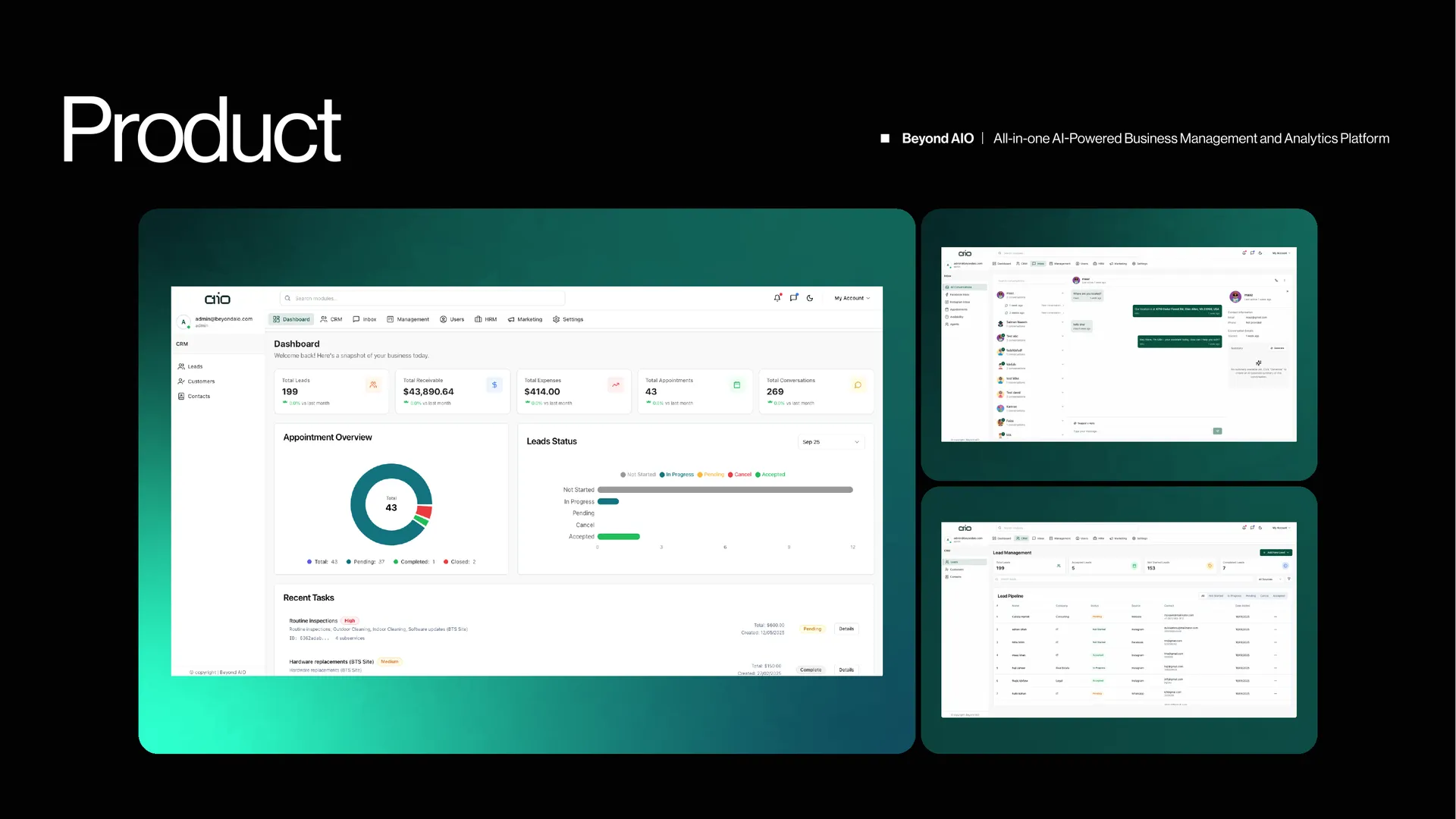
We're a Python development company for the specific layer where AI/ML actually runs: model-serving APIs, forecasting pipelines, and the evaluation harnesses that catch a regression before a customer does. A notebook that works once on a sample of data is a different artifact from a service that has to run correctly on every record, every day, under load — and closing that gap is most of what production AI engineering actually is. We've built this layer for Beyond AIO, a business-analytics platform whose forecasting models run on scikit-learn, TensorFlow, and PyTorch feeding real-time dashboards, not a research notebook.
Not a feature list. A real workflow.
Here's what this actually looks like once it's running against your product — not the pitch, the mechanism.
Evaluation before every release, not after a complaint
Before a model change ships, it answers a fixed set of real past cases and the results are compared against the previous version's baseline. A regression gets caught in CI, not in a customer's inbox.
Pipelines built for the record that doesn't fit the pattern
Real data has the missing field, the malformed date, the entry in the wrong format. We build the enrichment or scoring pipeline to route anything low-confidence to a review queue instead of guessing and shipping it anyway.
Model-serving that's just another service, not a special case
A FastAPI endpoint in front of a scikit-learn or PyTorch model, versioned and monitored the same way as everything else in the system — the pattern behind Beyond AIO's forecasting layer, so 'the ML part' doesn't become the one piece nobody on the team can operate.
Concrete, not conceptual.
Every engagement under this stack produces the same kind of artifact — reviewed weekly, owned by you from day one.
See what Python would look like on your AI system.
How Python orchestrates.
Chosen per engagement, never the other way around — this is how the pieces actually connect around the system we're building.
Asked on every first call.
FastAPI for serving, and the ML stack fits the problem — scikit-learn, TensorFlow, and PyTorch for classification and forecasting, the same combination running Beyond AIO's market-trend models; pandas and orchestration tools like Airflow for enrichment pipelines at scale. We pick the library the workload needs, not a default.
Both, depending on the problem. Off-the-shelf model APIs (OpenAI, Claude) cover most generative work; a forecasting or classification model that needs to learn your specific data gets a custom-trained model instead, the way Beyond AIO's AI/ML forecasting layer does.
A held-out evaluation set it runs against on every release, plus drift monitoring on live predictions against outcomes where they're knowable. If accuracy moves outside a threshold, the release is blocked or the model is flagged for retraining, not left running on the assumption that day-one accuracy holds forever.
Let's put AI to work in your business.
A 30-minute call. You bring the workflow or the roadmap — we'll tell you what's feasible, what it costs, and what we'd build first.