
The UI has to keep up with the agent.
React front-ends built for AI-native products — streaming responses, live agent state, real-time data — not a brochure site with a chatbot bolted on.
We're a React development company that builds one specific kind of product: the front-end layer for AI-native software — chat interfaces that stream token-by-token, agent consoles that show live tool calls, dashboards that update in real time as data changes underneath them. That's a different engineering problem from a marketing site or a CRUD admin panel, and it's the only kind of React work we take on. Every engineer on a React engagement also understands the AI system behind the interface, because interface and system can't be designed apart — Vaisela's AI seller assistant and Cove's operator portal both shipped on this stack.
Not a feature list. A real workflow.
Here's what this actually looks like once it's running against your product — not the pitch, the mechanism.
Streaming, token-by-token, without janky re-renders
A chat response arrives as a stream of tokens from the model API. We architect the render loop so text appears smoothly while the rest of the interface — sidebar, history, controls — stays fully interactive, not frozen mid-response.
Agent consoles that show the reasoning, not just the answer
When an agent calls a tool, checks a policy, or waits on an approval, the operator sees it happen — a live trace, not a spinner. This is the pattern behind Vaisela's seller-recommendation dashboard, where trusting the system mattered as much as the recommendation itself.
State that survives a multi-step agent workflow
An agent workflow can run for minutes across several tool calls and a human approval step. The UI has to hold state correctly through all of it — no lost context on a page refresh, no re-running a step that already completed.
Shipped, not promised.
Cove — Home Security Platform Consolidation
Operator portal, headless CMS, and marketing platform for a US home-security device ecosystem — three disconnected systems consolidated into one operator experience.
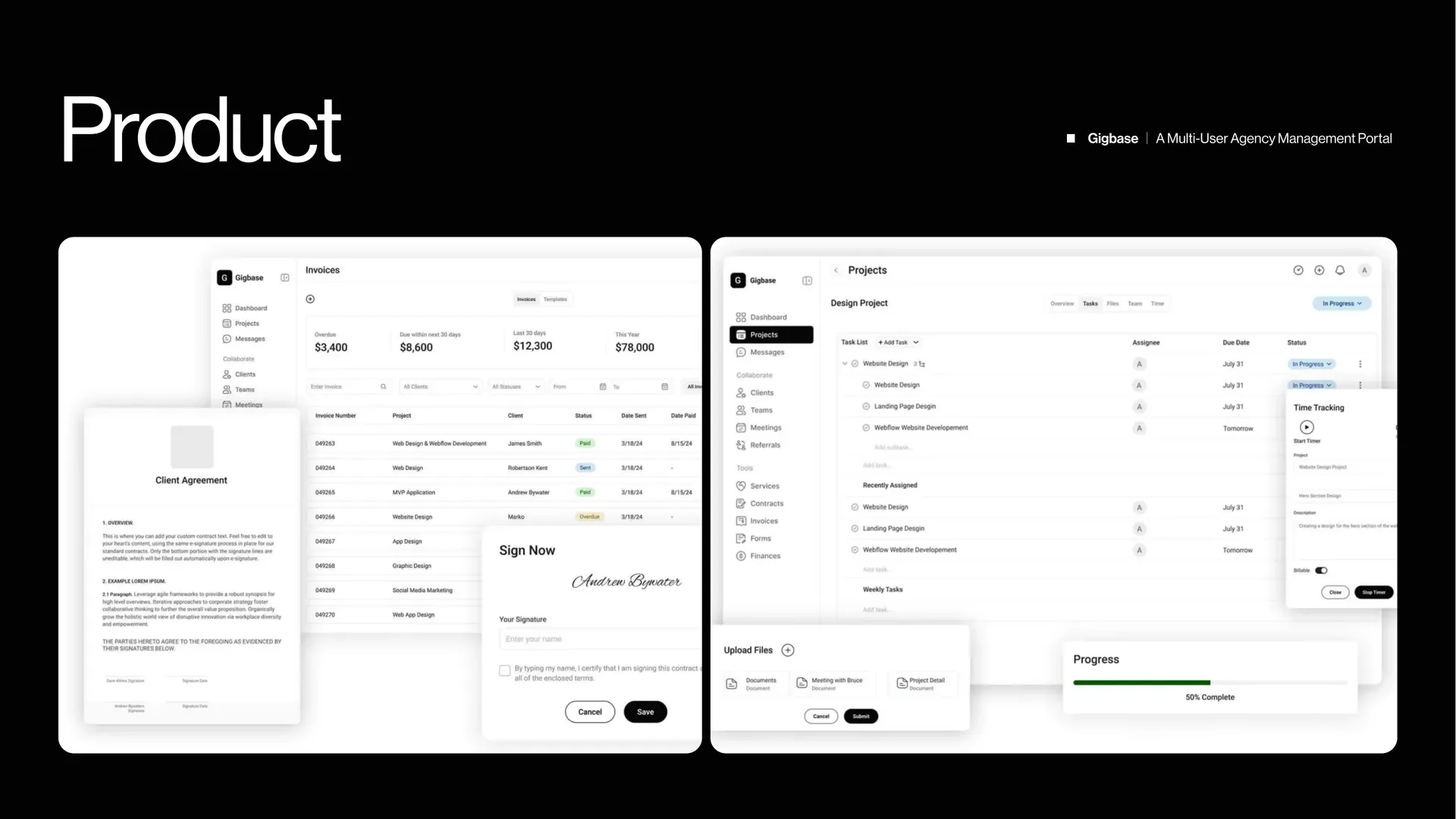
Gigbase — Multi-Tenant Agency Operating System
A multi-user agency management portal: projects, teams, clients, contracts, invoicing, real-time chat, meeting scheduling, and an admin-trained AI knowledge assistant — one subscription-based workspace.
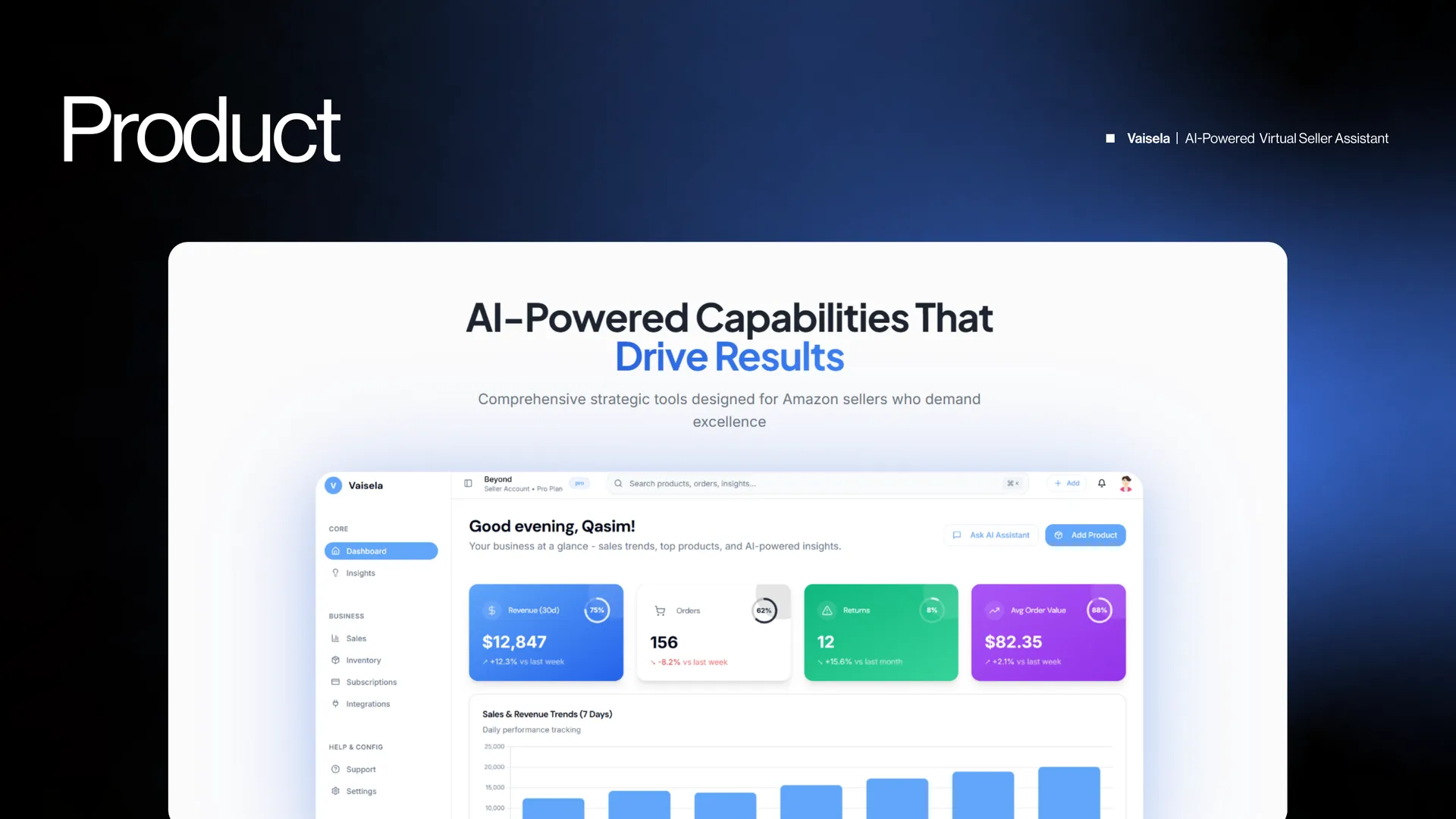
Vaisela — AI Virtual Seller Assistant for Amazon
An AI-powered virtual assistant for Amazon sellers: a custom-trained LLaMA model analyzes Seller Central data and proactively recommends actions — privacy-by-design, piloted with 200 sellers, architected to scale to millions.
Concrete, not conceptual.
Every engagement under this stack produces the same kind of artifact — reviewed weekly, owned by you from day one.
See what React would look like on your AI system.
How React orchestrates.
Chosen per engagement, never the other way around — this is how the pieces actually connect around the system we're building.
Asked on every first call.
Both — Next.js is our default when a project needs server rendering, routing, or an API layer alongside the front-end (Gigbase's agency platform, Cove's operator portal); plain React with Vite when it's a client app sitting in front of an existing backend. We pick the framework the project needs, not a default stack.
Both. Taking over an existing codebase starts with an audit — component structure, state management, test coverage — before we touch anything, so we're not guessing at intent from unfamiliar code.
Two things change: data arrives incrementally — streaming tokens, live agent events — instead of a single API response, and the interface has to represent uncertainty: a low-confidence answer, a step waiting on human review. Most component libraries aren't built to show that by default; we build the pattern into the architecture instead of bolting it on later.
Let's put AI to work in your business.
A 30-minute call. You bring the workflow or the roadmap — we'll tell you what's feasible, what it costs, and what we'd build first.